
Can You Restore Worn Wood Cabinets Without Losing Their Natural Grain?
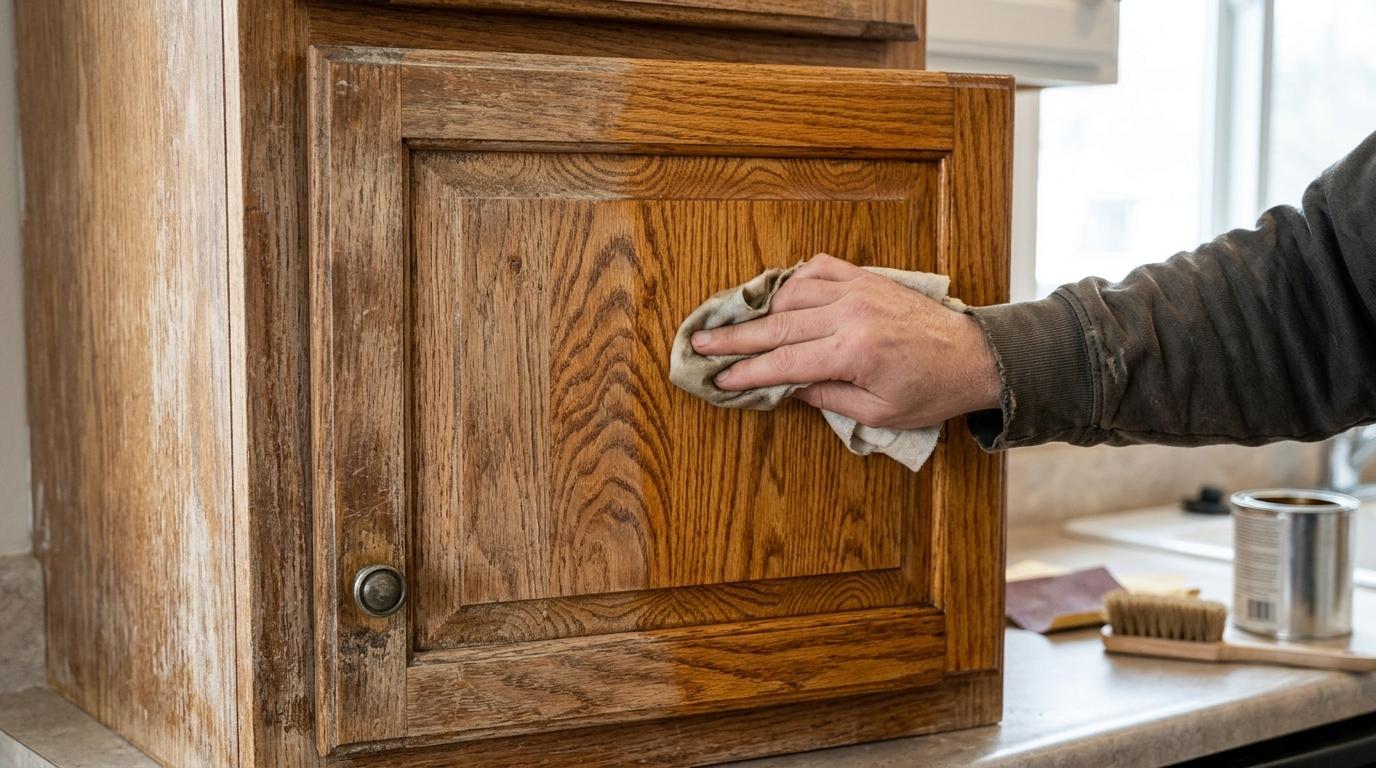
Your kitchen cabinets have started showing their age, but there's something about their natural wood appearance you still appreciate. The grain patterns give the kitchen warmth and character that painted cabinets might not provide. Unfortunately, scratches, faded finishes, and darkened areas around the handles make the cabinets look older than they should.
Replacing the cabinets seems unnecessary when the doors still close properly and the overall structure remains solid. Painting them would hide the visible damage, but it would also cover the wood grain you want to preserve. That leaves an important question: can damaged wood cabinets be restored without changing their natural appearance?
In many cases, yes. Wood cabinet restoration can improve worn finishes, address certain surface imperfections, and preserve the visible grain underneath. However, the results depend on whether the cabinets are made from solid wood, wood veneer, or another material, along with the condition of their existing finish.
For homeowners in Hanson, MA, identifying these details before beginning restoration can help determine which treatment will protect the wood rather than create additional damage.
Why Do Wood Cabinets Lose Their Original Appearance Over Time?
Kitchen cabinets experience repeated contact with moisture, cooking residue, cleaning products, and everyday handling. Over time, these conditions can affect the protective coating that gives wood its finished appearance. Even when the underlying material remains structurally sound, the visible surfaces may become dull or uneven.
One common problem is the buildup of grease around cabinet handles and frequently touched areas. Cooking oils combine with dust and household residue, creating a film that makes the wood look darker than surrounding surfaces. This buildup can sometimes be mistaken for permanent discoloration.
Sunlight can also change the appearance of wood and its finish. Cabinets positioned near windows may develop noticeable color differences compared with doors or panels that receive less light. The effect depends on the wood species, stain, protective coating, and duration of exposure.
Physical wear creates another challenge. Repeated contact with utensils, cookware, and cleaning tools can produce scratches or gradually weaken the finish. Once the protective layer becomes damaged, the wood may be more vulnerable to moisture and staining.
These problems do not always require complete refinishing. In some situations, proper cleaning and localized finish repairs may be enough to improve the appearance. More severe coating deterioration may require removing and replacing the existing finish.
The important distinction is whether the problem is limited to the protective coating or extends into the wood itself. Treating surface grime as though it were deeply damaged wood can lead to unnecessary sanding and removal of otherwise sound material.
How Can You Tell Whether Your Cabinets Are Solid Wood or Veneer?
Before attempting to restore a natural wood finish, it is important to understand the material underneath it. Cabinets that look nearly identical from the outside can have very different constructions, and those differences affect which restoration methods are appropriate.
Solid wood components consist of wood throughout their thickness. Many traditional cabinet doors and face frames use solid wood, although the center panels may be made from different materials. Solid wood can often tolerate more refinishing work than a thin decorative surface, provided it remains in suitable condition.
Wood veneer is different. It consists of a thin layer of genuine wood attached to a supporting material, such as plywood or engineered wood. Because the visible layer is relatively thin, aggressive sanding can remove the natural grain and expose the underlying substrate.
Some cabinet surfaces have a printed wood-grain appearance rather than real wood. Laminate, thermofoil, and other manufactured finishes can imitate natural wood patterns, but they cannot necessarily be stripped and stained like solid hardwood.
Examine an inconspicuous edge, the back of a door, or an existing exposed section to look for clues about construction. Solid wood often shows grain continuing around certain edges, while veneer may have a visible boundary between the surface layer and its core. These observations are not always conclusive, especially on cabinets with edge banding.
A professional inspection can help identify the materials and determine whether the original finish can be safely restored. This step becomes particularly important when the cabinets have previously been painted, stained, or refinished.
Choosing the correct method protects the visible wood while reducing the risk of irreversible surface damage.
Can Scratches, Faded Finishes, and Dark Stains Be Repaired?
The possibility of repairing a damaged cabinet surface depends on how deeply the damage extends. Minor wear affecting only the protective coating is generally easier to address than discoloration or deterioration that has penetrated the wood.
Light scratches may be treated with an appropriate localized repair method when the surrounding finish remains intact. However, matching the original sheen and color can be difficult, particularly on older surfaces that have changed appearance over time.
Faded finishes require a different assessment. If the coating has lost its clarity or consistency, applying another product over it may not correct the problem. The existing coating may need to be evaluated for adhesion, compatibility, and deterioration before a new finish is considered.
Dark stains around handles may come from accumulated grease, repeated touching, or changes within the finish itself. Careful cleaning can sometimes reveal that the wood underneath is in better condition than expected. More persistent discoloration may require additional treatment, but excessive cleaning or sanding can create a visibly lighter patch.
Water stains deserve particular attention because the visible mark may indicate a problem beneath the surface. A shallow finish mark may be repairable, while swelling, separation, or softened wood can signal material damage that requires more extensive work.
Homeowners should avoid using strong chemical cleaners or abrasive pads without confirming their compatibility with the finish. A product that removes grease effectively may also soften, discolor, or damage an older coating.
The goal should be to remove or correct the damaged material while preserving as much sound wood and existing finish as practical.
How Can Professional Restoration Preserve the Natural Wood Grain?
Preserving natural wood grain requires choosing a finish that allows the underlying pattern to remain visible. Unlike opaque paint, transparent and certain semi-transparent finishing systems can highlight the wood's natural texture, color variation, and grain direction.
The process begins with evaluating the existing surface. Some cabinets need thorough cleaning and limited repairs, while others have deteriorated finishes that require more extensive preparation. The correct approach depends on the coating already present and the condition of the wood beneath it.
When refinishing is appropriate, the old coating may need to be removed using a method suitable for the material and finish. Preparation should be controlled carefully, especially on veneered surfaces. Sanding too aggressively can alter the wood's appearance or remove the thin decorative layer entirely.
Choosing a new stain is another important decision. Stains can change how light or dark the wood appears, but they do not always produce an even result across different species, grain patterns, or previously repaired sections. Testing on a representative sample or concealed surface helps establish realistic expectations.
A compatible clear protective coating is usually important for kitchen cabinetry because the surfaces experience frequent handling and exposure to moisture. The coating must be selected and applied according to its technical requirements to achieve suitable adhesion and durability.
Working with Cabinet Restoration Specialists can help homeowners evaluate which parts of their existing cabinets are suitable for restoration and which may need individual repairs or replacement.
One detail worth discussing is the expected variation in the finished appearance. Natural wood is not perfectly uniform, and restoring it does not necessarily eliminate every darker grain line, mineral streak, or difference between individual boards.
Those variations are part of what makes a natural wood finish distinctive. A successful restoration should improve the condition and consistency of the cabinetry without requiring every piece of wood to look identical.
When Is Restoration Better Than Painting or Replacing Cabinets?
Restoration is often worth considering when the underlying wood is in good condition and its natural appearance remains an important part of the kitchen's design. If the cabinet structure is stable and the main concerns involve finish wear, refinishing may achieve the desired result without replacing the entire installation.
Painting offers a different outcome. An opaque cabinet coating can hide many color variations and create a more uniform appearance, but it also covers the visible wood grain. For homeowners who specifically value the look of oak, maple, cherry, or another natural material, that may be an unwanted compromise.
Cabinet replacement becomes more relevant when the existing structure has significant damage or no longer serves the household's needs. Severely deteriorated cabinet boxes, extensive moisture damage, or a layout that requires major changes can make restoration less practical.
The condition of individual doors also matters. A cabinet may have sturdy boxes but one or two doors with serious veneer loss or damage. In such cases, replacing selected components and coordinating their finishes may be more reasonable than replacing the entire kitchen.
Another consideration is the result you expect. Restoration can improve worn cabinets, but it cannot always return old wood to the precise color and appearance it had when originally installed. Previous sun exposure, stains, repairs, and changes in the material may remain partly visible.
A homeowner seeking a completely different door profile or a major change in kitchen configuration may be better served by refacing or replacement. Someone who wants to retain existing craftsmanship and natural grain may find restoration more appropriate.
The decision should be based on material condition, desired appearance, and the extent of work required rather than assuming one approach is always preferable.
What Should You Ask Before Hiring Someone to Restore Wood Cabinets?
Before selecting a restoration service, ask how the condition and construction of the existing cabinets will be evaluated. A detailed assessment should identify the material, the existing finish, visible damage, and any components that may not be suitable for refinishing.
It is also useful to ask what the proposed work will involve. Cleaning, localized repairs, finish removal, staining, and protective coating application are separate processes. Not every cabinet needs all of them, so the written scope should explain which treatments are recommended.
Request examples of projects involving similar wood materials and finishes. A restoration completed on solid oak may not demonstrate how a professional handles delicate veneer or a different wood species. Similar examples can provide a more realistic understanding of the possible results.
Discuss how colors and sheens will be selected. A small stain sample may appear different from the same finish applied across an entire cabinet door. Kitchen lighting and surrounding materials can also influence how the finished wood looks.
Homeowners should ask about protecting countertops, flooring, appliances, and nearby surfaces during the work. Preparation and finishing may involve dust, cleaning products, or coating materials that need appropriate containment and ventilation.
Finally, confirm the expected maintenance requirements. Different coatings have different cleaning recommendations and curing times. Using a newly finished cabinet too aggressively before the coating has adequately cured may affect the result.
A written proposal should describe the work, the materials or finishing system, the expected appearance, and any limitations caused by existing damage. Clear expectations are especially important when the goal is preserving natural wood rather than covering it with an entirely new opaque finish.
Conclusion
Worn kitchen cabinets do not always need to be painted or replaced to regain an attractive appearance. When the wood and underlying structure remain in suitable condition, restoration may correct surface wear, improve the finish, and preserve the natural grain that gives the cabinets their character.
Understanding wood grain is useful because the direction, pattern, and structure of the wood influence how surfaces respond to staining, sanding, and finishing. These characteristics should be considered before selecting a restoration method.
For homeowners in Hanson, MA, the best starting point is identifying the cabinet material and determining whether the existing damage affects the finish or the wood itself. A careful assessment can help preserve usable cabinetry while avoiding unnecessary replacement or irreversible surface alterations.