
What Skills Can You Gain from a Social Media Marketing Course Online?
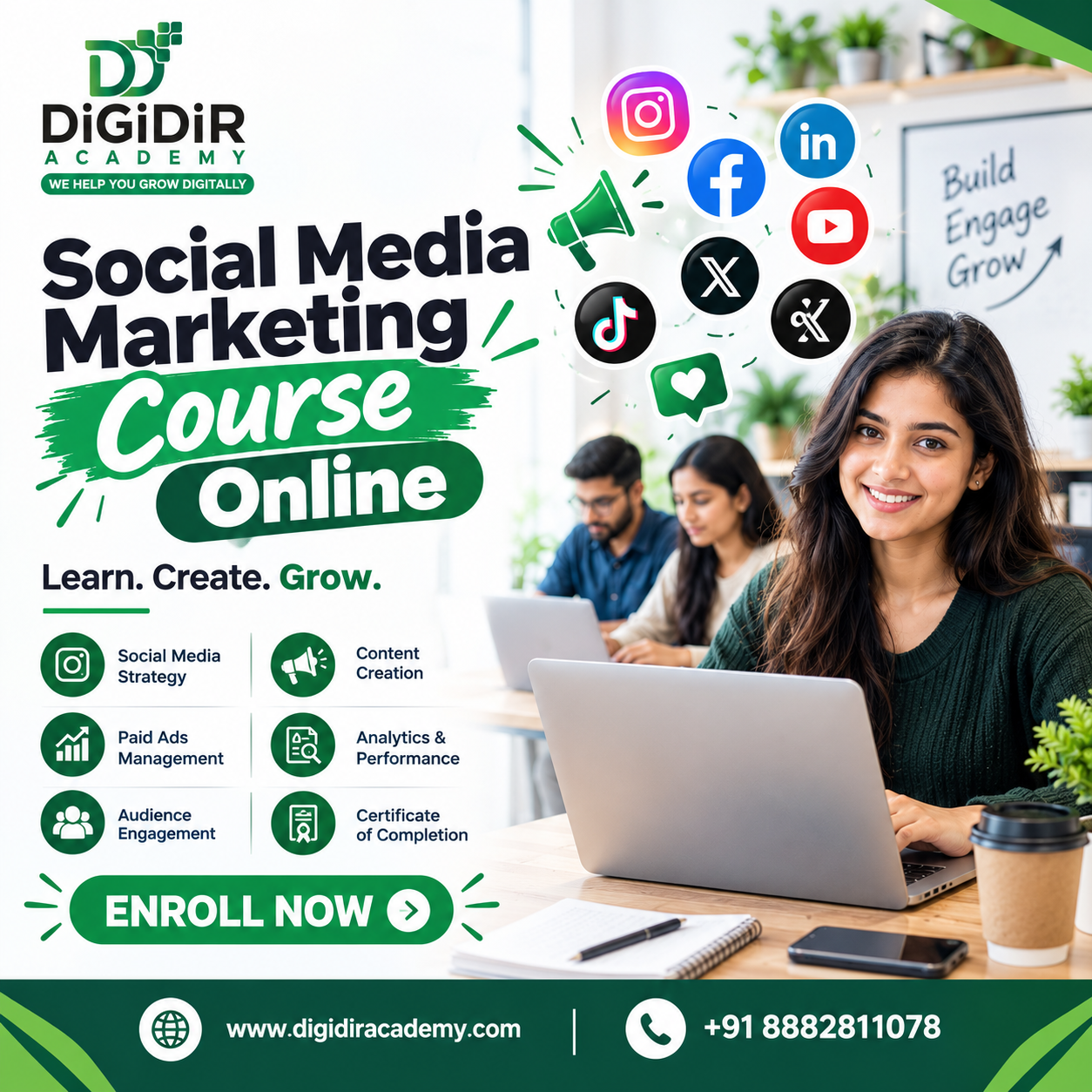
An Social Media Marketing course Online may be very useful for developing skills related to content creation, managing social media channels, researching audiences, creating ideas, using analytics, advertising, and building communities. Such skills will be useful for students, marketers, freelancers, and entrepreneurs who are interested in developing their digital presence and working in digital marketing.
The usage of social media has become an integral part of communication for many brands. Instagram, Facebook, LinkedIn, YouTube and other social networks have become the places where brands can communicate, interact with their target audiences, advertise their products and establish strong relationships with customers.
Why Is a Social Media Marketing Course Online Important?
Business profile management is not only about adding pictures and writing captions. Social media marketing demands knowledge about behavior patterns of the audience, tools of platforms, content formats, the goal of the campaign, and performance indicators.
A well-structured course can help people learn how to create successful campaigns, work with the appropriate content, keep constant communication, and track the performance.
Here is the list of 10 useful skills which you may learn in the social media marketing course.
1. Content Planning and Strategy
The content planning allows marketers to post the proper content in the appropriate time and for the appropriate audience. The absence of strategy leads to inconsistencies in social media profiles and inability to serve business goals.
A social media marketing course will teach you how to:
-
Determine the purpose of the content.
-
Understand the interests of your audience and their needs.
-
Choose the proper content format.
-
Create schedules for weeks and months.
-
Keep consistency in your brand language.
-
Post content related to promotions and business activities.
For example, educational institutions can post the courses' information, students' works, advice on studying and career, etc.
2. Social Media Content Creation
The main point is to grab people's attention while delivering your message at the same time. Marketing professionals have to know how different formats function on social media sites.
You will be able to learn how to write:
-
captions.
-
carousel posts.
-
short video/reel content.
-
educational posts.
-
hashtags.
-
calls to action.
Content must fit your target audience and the social media site you choose to use and not necessarily follow all trends. Your post on LinkedIn, for instance, must differ from the video content posted on Instagram.
3. Audience Research and Targeting
Understanding your audience helps you create content that addresses genuine interests and problems.
Audience research involves examining factors such as:
-
Age groups and general demographics.
-
Interests and content preferences.
-
Customer questions and feedback.
-
Buying behavior and customer needs.
-
Preferred social media platforms.
-
Engagement patterns.
These insights can help marketers develop more relevant campaigns. Instead of publishing content based on assumptions, they can use audience research to make informed decisions.
4. Social Media Platform Management
Each social media platform serves different purposes and audiences. Learning how to manage them effectively is an important part of professional training.
A course may introduce you to:
-
Instagram: Reels, Stories, carousels, and visual storytelling.
-
Facebook: Community engagement, business pages, and advertising.
-
LinkedIn: Professional content, networking, and business communication.
-
YouTube: Video publishing, channel development, and audience retention.
-
Pinterest: Visual discovery and content distribution.
You can also learn how to organize publishing schedules, maintain profile consistency, and adapt content to platform requirements.
5. Social Media Analytics and Reporting
Publishing content is only one part of the process. Marketers also need to understand whether their efforts are producing useful results.
Social media analytics can help you evaluate:
-
Reach and impressions.
-
Likes, comments, and shares.
-
Engagement rate.
-
Video views and watch time.
-
Link clicks.
-
Follower growth.
-
Website traffic.
-
Leads and conversions.
For example, if a video receives many views but very few website visits, the marketer may need to review the content topic, call to action, or audience relevance.
Learning to interpret these metrics helps marketers make decisions based on evidence rather than guesswork.
6. Paid Social Media Advertising
Organic content can help build a community, while paid advertising can support specific goals such as lead generation, website traffic, and product promotion.
Social media marketing training online may introduce learners to paid campaign fundamentals, including:
-
Campaign objectives.
-
Audience selection.
-
Advertising budgets.
-
Creative formats.
-
Ad copywriting.
-
Conversion tracking.
-
Performance measurement.
-
Campaign optimization.
Practical exercises can help learners understand how advertising campaigns are structured and why targeting, messaging, and landing page experience influence results.
7. Copywriting and Brand Communication
Clear writing helps businesses explain their value, answer customer questions, and encourage meaningful action.
Social media copywriting involves creating messages that are concise, relevant, and appropriate for a specific audience.
Important skills include:
-
Writing attention-grabbing opening lines.
-
Communicating product or service benefits.
-
Using a consistent brand voice.
-
Creating clear calls to action.
-
Adapting tone to different platforms.
-
Writing promotional and educational content.
A strong caption does not need complicated language. It needs to communicate the main idea clearly and give readers a reason to engage.
8. Community Management and Customer Engagement
Social media is a two-way communication channel. Customers may ask questions, share feedback, raise concerns, or discuss their experiences with a brand.
Community management teaches marketers how to handle these interactions professionally.
Key responsibilities include:
-
Responding to comments and messages.
-
Answering frequently asked questions.
-
Maintaining a respectful communication style.
-
Identifying recurring customer concerns.
-
Escalating sensitive complaints appropriately.
-
Encouraging constructive discussions.
Good community management can help businesses build trust and understand what their audiences expect from their products or services.
9. Influencer Marketing and Collaboration
Influencer marketing allows businesses to collaborate with creators whose audiences may be relevant to their products or services.
Learning the fundamentals can help you understand how to:
-
Identify suitable creators.
-
Evaluate audience relevance.
-
Review engagement quality.
-
Plan campaign deliverables.
-
Coordinate content schedules.
-
Track campaign performance.
-
Disclose sponsored partnerships appropriately.
The best collaboration is not always with the creator who has the largest following. Audience relevance, credibility, content quality, and campaign objectives also matter.
10. Trend Analysis and Social Media Optimization
Social media platforms evolve continuously. New content formats, creative approaches, platform features, and audience preferences can influence campaign performance.
Trend analysis helps marketers recognize relevant opportunities without copying every viral post.
You can develop the ability to:
-
Monitor platform updates.
-
Identify emerging content formats.
-
Research competitor activity.
-
Evaluate trending topics.
-
Adapt content to audience interests.
-
Test different creative approaches.
-
Review results and refine future campaigns.
The goal is to use trends thoughtfully while maintaining the brand's identity and marketing objectives.
How Can You Choose the Right Social Media Marketing Course?
Choosing the right course depends on your experience, career goals, and preferred learning format. Before enrolling, review the curriculum and practical learning opportunities.
Look for a program that includes:
-
Content strategy and planning.
-
Training across relevant social platforms.
-
Content creation and copywriting.
-
Social media analytics.
-
Paid advertising fundamentals.
-
Practical assignments and projects.
-
Trainer guidance and feedback.
-
Portfolio development opportunities.
-
Updated platform practices.
If you are looking for local training, a Social Media Marketing course in Noida may be worth considering if you prefer classroom interaction, local networking, or in-person guidance. Compare the curriculum, teaching approach, and practical exposure before making a decision.
Who Can Benefit from Social Media Marketing Training Online?
Social media marketing skills can be useful for a wide range of learners, including:
-
Students exploring digital marketing careers.
-
Fresh graduates building job-ready skills.
-
Working professionals expanding their expertise.
-
Entrepreneurs promoting their businesses.
-
Freelancers offering social media services.
-
Content creators learning marketing strategy.
-
Small business owners managing their own profiles.
Beginners can start with content planning and platform fundamentals before progressing to analytics, advertising, and campaign strategy.
Conclusion
Taking an online course of Social Media Marketing would help you enhance your skills related to creativity, analysis, and communication. These skills will be useful for you in achieving success through various career tracks and business goals.
If you want to study digital marketing education at Noida, DigiDir Academy is just one of the many institutes to choose from after evaluating their career-oriented courses. Try to enroll yourself into a course that helps you learn hands-on and understand social media strategy rather than content creation.
Frequently Asked Questions
1. What skills will you learn in an Online Social Media Marketing course?
A student can learn skills like content creation, social media management, audience analysis, copywriting, data analytics, pay per click (paid advertisement), community management, and campaign optimization.
2. Is Online Social Media marketing training for beginners appropriate?
Yes, because beginners will get training about how to use the platforms, plan their content, and engage their audience, followed by ads and data analytics.
3. How long does it take to learn social media marketing?
The time required depends on how much time you dedicate towards the course. But basic level skills will not take much time to develop.
4. Which job positions are there available for someone who has done the social media marketing course?
There are different job positions including Social Media Executive, Social Media Manager, Content Strategist, Community Manager, and Social Media Advertising Specialist.
5. How to select the best Social Media Marketing course in Noida?
You need to compare the course contents, projects, experience of trainers, platforms used, data analytics, and career guidance.