
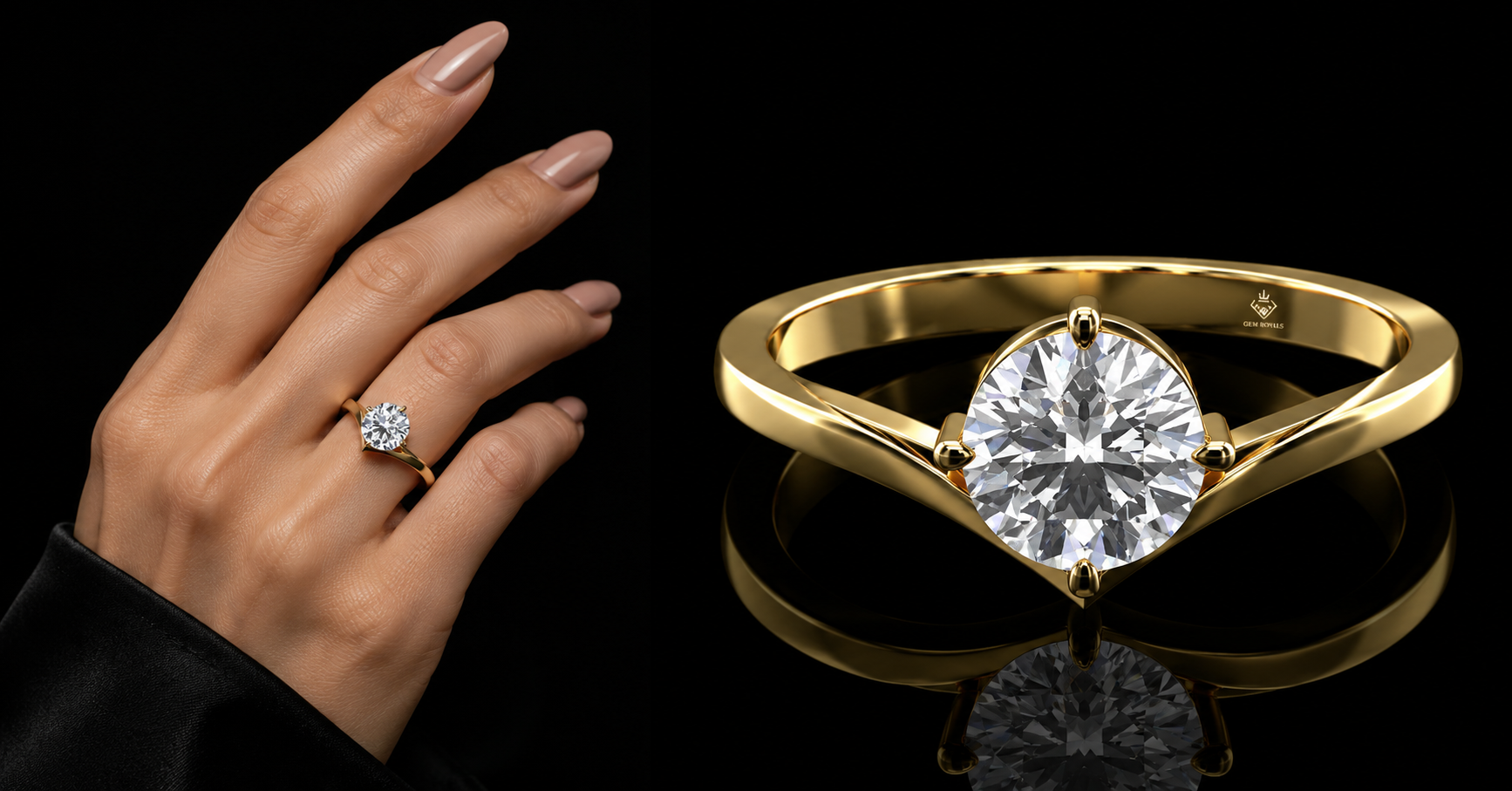
2 CT Wedding Ring Under a Budget That Doesn’t Look Like It — Gem Royals Reveals How
You’ve pictured it: a ring that makes someone say “wow” across the dinner table. Then you saw what a true two-carat diamond costs, and the daydream wobbled. Couples often tell us they want presence, not debt. In our experience, a 2 ct wedding ring that looks expensive is rarely about spending the most. It’s about knowing which details the eye actually notices and which ones only show up on paper. Here’s what matters, what doesn’t, and where a sensible budget goes furthest.
What Makes a 2 CT Wedding Ring Look Expensive
Carat is a weight, not a size. Think of it like luggage on a scale: the number tells you how heavy the bag is, not how much of it you can see. Two 2.00 ct stones can look noticeably different because of how much weight sits hidden below the girdle, the stone’s outer edge.
What shoppers notice in person is surface area, how the stone covers the finger, and how it behaves in moving light. Photos flatten all of that. A well-cut stone can look flat under harsh office lighting and then come alive near a window or under warm restaurant lamps. A poorly cut one often looks fine in a studio photo and dull in daily life.
So the real goal isn’t weight alone. It’s a stone that spreads well, reflects light cleanly, and has no distracting flaws.
How to Lower the Cost Without Lowering the Impact
Put cut first
Cut controls sparkle more than color or clarity. For round diamonds, GIA and IGI both report a cut grade, and “Excellent” (or “Ideal” at some labs) is the target. Fancy shapes don’t get an official cut grade from GIA, so look closely at proportions: table percentage (the flat top facet’s width relative to the stone) and total depth. A table in the mid-50s to low 60s is commonly considered well proportioned for rounds. A stone that’s too deep wastes weight in places you can’t see.
Find the color and clarity sweet spots
Most people can’t tell a G from an I color grade once the stone is set, especially in yellow or rose gold. For clarity, VS2 to SI1 stones are often eye-clean, meaning no flaws are visible without magnification. “Often” isn’t “always,” though. Where an inclusion sits matters more than its grade, so ask for high-resolution images or a video of the exact stone.
Weigh lab-grown, natural, and moissanite honestly
Lab-grown diamonds are chemically and optically diamond, and they typically cost a fraction of natural stones. The trade-off is resale value and long-term pricing, which are less established and have shifted as supply has grown. Natural diamonds carry rarity and stronger resale recognition, at a higher price.
Moissanite is a different gemstone. It’s durable and brilliant, but it flashes more colorful, rainbow-like fire than a diamond does. It’s sold by millimeter size rather than carat, and a round diamond of 2 ct measures around 8 mm. If you love the look and value the savings, it’s a legitimate choice. Just buy it knowing it isn’t a diamond.
Prices vary by retailer, quality, and market, so compare like for like.
Why Shape Matters More Than Most Budgets Admit
Here’s a quiet trick. Elongated shapes such as oval, pear, and marquise spread their weight across a longer outline, so they face up larger than a round of the same carat weight. Many couples find an oval 2 ct reads closer to a bigger round. These shapes are also often priced lower per carat than rounds, though that varies.
There’s one thing to check: the bow-tie, a darker band across the middle of ovals, pears, and marquises. Mild ones are normal and can be hard to see. Strong ones are distracting. Look at the stone in motion, not just in a still photo.
Emerald and Asscher cuts look elegant and can seem large, but their open facets show clarity more openly, so they usually call for a higher clarity grade.
Settings and Metals That Boost Presence
Setting is where you can add visual size for very little. A few options to consider:
- Hidden halo: A ring of small stones beneath the center stone adds sparkle from the side without changing the front view.
- Slim band: A thinner band makes the center stone look larger by contrast. Don’t go so thin that it risks bending with daily wear.
- Bezel: It’s secure and sleek, though the metal rim slightly reduces visible stone surface.
- East-west orientation: Turning an oval or marquise sideways makes it appear wider across the finger.
Metal changes the mood too. White gold and platinum push stones to look whiter, but white gold needs occasional re-plating, and platinum costs more. Yellow gold warms a slightly lower color grade nicely. Rose gold is flattering and a bit forgiving of warm tones.
Many Types of 2 CT Wedding Rings Worth Considering
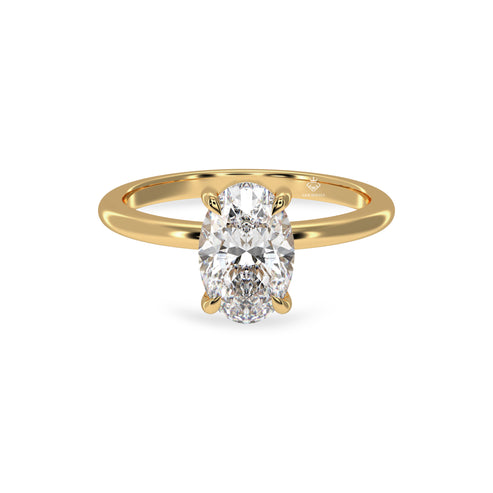
Solitaire. Pure and classic. All the budget goes into the center stone, so cut quality really shows.
Three-stone. Side stones add width and presence, and they can let the center stone be a bit smaller while the ring still reads as substantial.
Halo. Maximum sparkle and visual size. One caution: with halos, “2 ct” often means total carat weight (TCW), not the center stone. Always ask which one is being quoted.
Vintage-inspired. Milgrain, filigree, and old-cut styles add character and can make a modest stone feel more distinctive. Some people love the soft, glowing look of old-cut sparkle. Others prefer crisp modern flash. Try both if you can.
Any of these can work as a 2 ct wedding ring that fits a real budget. The right one is whichever you’ll actually enjoy looking at every day.
Common Budget Mistakes to Avoid
- Chasing carat over cut. A 2.00 ct stone with a weak cut can look smaller and duller than a well-cut 1.8 ct.
- Paying for grades you can’t see. Stepping up two clarity levels past “eye-clean” rarely changes what you see on your hand.
- Skipping certification. A report from GIA or IGI lets you verify what you’re buying and compare fairly. Be wary of stones with no independent report.
- Ignoring the setting’s effect on the budget. Elaborate settings and precious metals can quietly add up, so price the whole ring, not just the stone.
- Buying from photos alone. Ask for video. Lighting can hide or exaggerate nearly everything.
Quick Checklist Before You Buy
- Decide your total budget first, then split it between stone and setting.
- Prioritize cut, then eye-clean clarity, then color.
- Compare dimensions (in mm), not just carat weight.
- Ask whether “2 ct” means the center stone or total weight.
- Request a GIA or IGI report, plus video of the actual stone.
- Check for bow-tie, chips, or exposed inclusions near the edges.
- Confirm the return policy and resizing terms.
- Look at it in more than one kind of light.
Bringing It All Together
A big-look ring comes from smart choices, not just a big number. Prioritize cut, pick a shape that spreads, set it so it shines, and be honest about what trade-offs you’re comfortable with. A budget-friendly 2 carat ring can look remarkable on the hand when those pieces line up.
If you’d like to browse options once you’ve settled on your priorities, Gem Royals is one place worth a look for comparing styles, stone types, and settings at your own pace.