
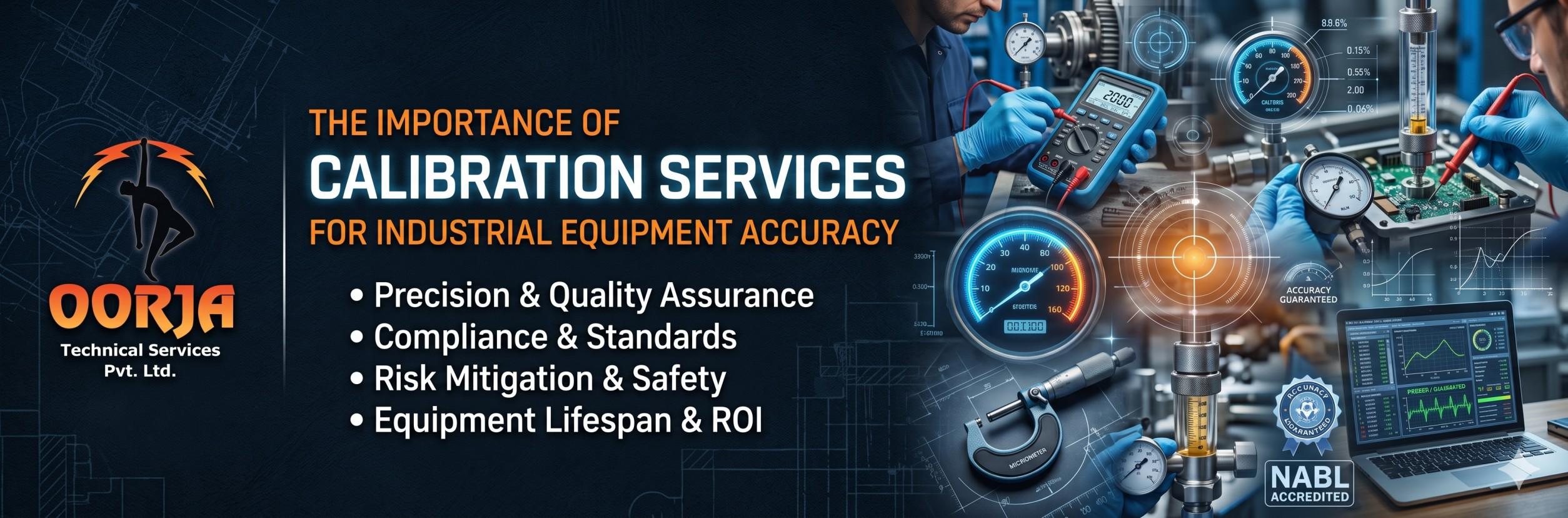
The Importance of Calibration Services for Industrial Equipment Accuracy
In modern industries, accurate measurements are essential for maintaining product quality, operational efficiency, and workplace safety. Manufacturing plants, pharmaceutical companies, laboratories, and other industrial facilities depend on properly functioning instruments to achieve reliable results. Regular calibration helps businesses maintain measurement accuracy and identify potential equipment issues before they affect operations.
Why Are Calibration Services Important?
Professional calibration services help ensure that measuring instruments provide accurate and reliable readings. Over time, instruments can experience measurement deviations because of regular use, environmental conditions, and equipment ageing.
Regular calibration helps businesses reduce measurement errors, improve quality control, and maintain compliance with applicable industry requirements. It can also help identify instruments that require adjustment, maintenance, or replacement.
Calibration can also help organisations understand whether an instrument continues to perform within the limits required for its intended use. When results show a deviation, the business can assess whether adjustment, repair, or further investigation is needed before relying on the readings again.
The appropriate calibration interval depends on the instrument, how often it is used, its operating environment, previous results, and the importance of the measurement. Reviewing these factors regularly helps businesses maintain a practical and well-documented calibration schedule.
The Role of Equipment Testing and Calibration
Industrial instruments must perform consistently to support efficient operations. Equipment calibration helps verify the accuracy of measuring devices by comparing their readings against appropriate reference standards.
Similarly, reliable testing services help businesses assess equipment performance and identify potential issues. Depending on the instrument and application, testing and calibration activities can support preventive maintenance, quality assurance, and process improvement.
For example, instruments used in production monitoring may influence decisions about temperature, pressure, dimensions, or electrical values. If readings are unreliable, teams may spend additional time investigating process variations or checking results again. Appropriate testing and calibration practices help provide greater confidence in the measurements used for these decisions.
Calibration records should be reviewed alongside maintenance and quality records. This can help identify recurring deviations, instruments that frequently need adjustment, or equipment that may require a closer technical assessment.
Choosing the Right Calibration Laboratory
Selecting a suitable calibration laboratory is an important step for businesses that depend on precise measurements. Companies should consider the laboratory's technical capabilities, relevant accreditation where required, calibration scope, and experience with the instruments they use.
Before selecting a laboratory, businesses should confirm that its service scope covers the instrument type, measurement range, and accuracy requirements involved. They should also ask what information will be included in the calibration report, how the instrument will be identified, and what happens if the results fall outside the required limits.
Clear documentation supports traceability and makes it easier to review calibration history during quality checks or audits. Where accreditation is required, the relevant scope should be verified rather than relying only on a general statement of accreditation.
Conclusion
Calibration is an important part of industrial quality management. By maintaining appropriate calibration schedules and working with qualified service providers, businesses can improve measurement reliability and support efficient operations.
A consistent calibration process helps organisations make better use of measurement data, maintain equipment records, and respond to potential problems in a timely manner. When combined with preventive maintenance and suitable operating procedures, calibration supports a more reliable approach to industrial quality control.
Oorja Technical Services Pvt. Ltd.
Email: [email protected]
Phone: +91-9907759797
Website: oorjatechnical.in