
How Salesforce Marketing Cloud Helps Businesses Deliver Omnichannel Experiences

Salesforce Marketing Cloud for Omnichannel Customer Experiences
Introduction
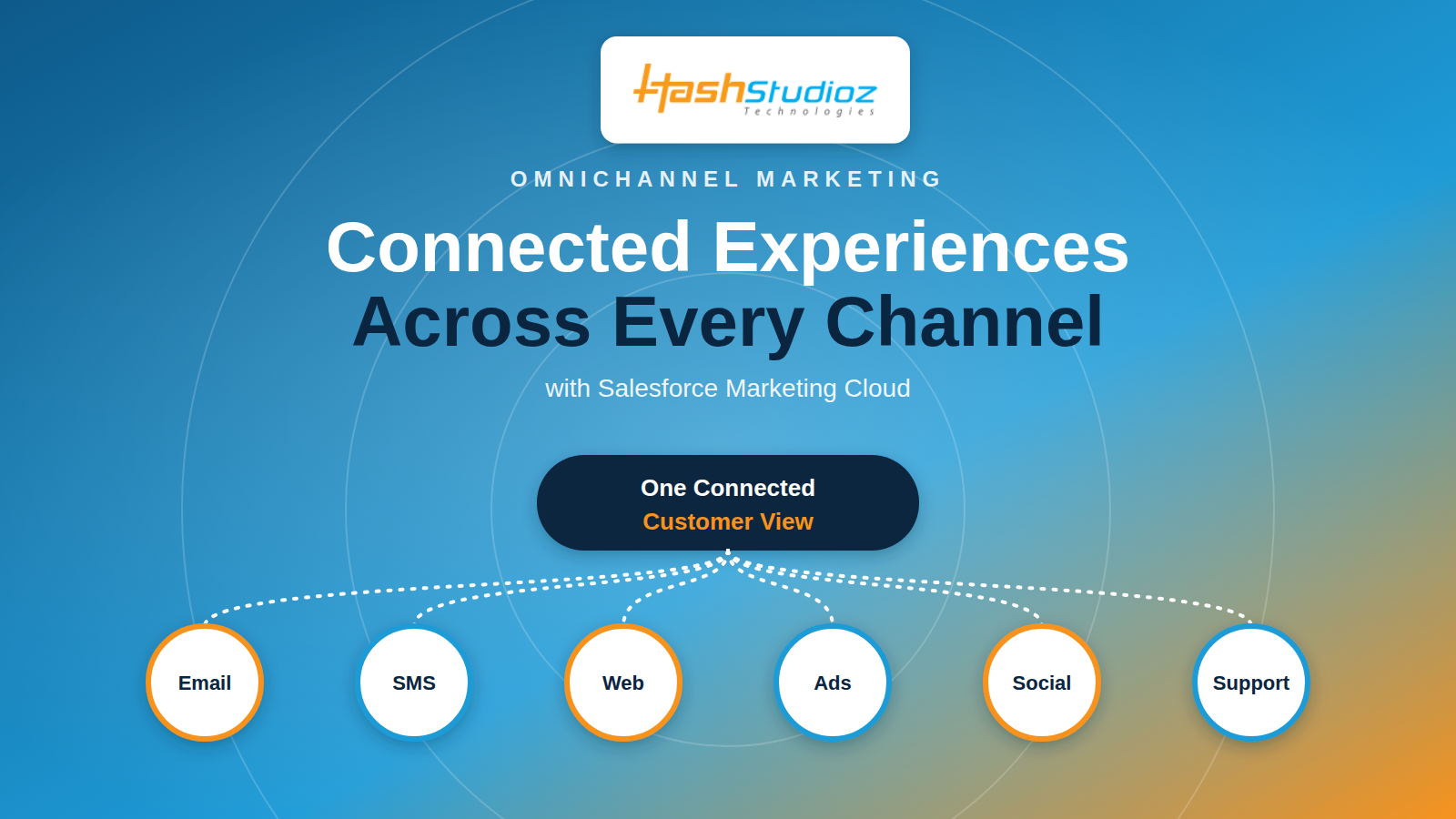
Customers rarely interact with a business through one channel alone. They might discover a product on social media, compare options on a website, receive an email offer, and contact customer support before purchasing.
When these interactions are disconnected, customers can receive repetitive messages or offers that no longer match their needs. Salesforce Marketing Cloud helps marketing teams coordinate communication across channels and use available customer data to create more consistent experiences.
An effective omnichannel strategy is about more than appearing on every platform. It means understanding how channels work together and giving customers relevant information at the right stage of their journey.
What Does Omnichannel Marketing Mean?
Omnichannel marketing coordinates customer communication across digital touchpoints. Email, SMS, push notifications, websites, advertising, and other channels can support a connected customer journey.
Connected Data and Communication
When relevant customer data is available across systems, marketers can make better-informed decisions about audiences and messaging. Integrating Marketing Cloud with suitable CRM and ecommerce platforms can support this coordination.
Personalized Customer Journeys
A journey can respond to a customer's actions. For example, someone who registers for a webinar may receive a confirmation, a reminder, and useful follow-up material. If the person later requests a sales consultation, subsequent messaging can reflect that change in interest.
Why Businesses Need Connected Customer Experiences
1. More Consistent Brand Communication
A coordinated approach helps businesses maintain a recognizable tone and message across channels. Customers can move between touchpoints without receiving conflicting information.
2. More Relevant Marketing Messages
Audience segmentation and customer behavior can help determine which messages are useful to different groups. Personalization should be based on appropriate data and should respect customer preferences.
3. Improved Campaign Visibility
Campaign analytics help marketers compare engagement and conversion outcomes. When tracking is configured correctly, teams can identify which touchpoints contribute to a customer journey and where improvements may be needed.
Marketing Cloud Tools That Support Omnichannel Campaigns
Email and Mobile Messaging
Email campaigns are useful for detailed information, newsletters, product updates, and educational content. Mobile messages can support timely reminders or short notifications when the channel is suitable and permitted.
Audience Segmentation and Analytics
Audience tools help organize contacts into groups based on relevant attributes and behaviors. Analytics help teams review campaign results and identify opportunities to refine content, timing, and targeting.
AI-Assisted Personalization
AI capabilities can support recommendations and personalized experiences. Businesses should validate outputs, establish suitable controls, and avoid relying on incomplete or inappropriate data.
How to Build an Omnichannel Strategy
Step 1: Understand Customer Touchpoints
Map the ways customers discover, evaluate, purchase, and seek support for your products. Identify where communication becomes repetitive, where data is missing, and which channels matter most to your audience.
Step 2: Connect the Relevant Systems
Review the systems that hold customer, purchase, and engagement information. Integrate appropriate sources with Marketing Cloud and establish rules for data quality, permissions, consent, and synchronization.
Step 3: Design a Connected Journey
Choose a specific customer objective, such as onboarding a new subscriber or encouraging repeat purchases. Define the journey's entry criteria, message sequence, channel choices, and exit conditions.
Step 4: Measure and Refine
Review engagement, conversions, opt-outs, and customer responses. Use the results to adjust the journey rather than assuming that adding more messages will improve performance.
Common Challenges and Solutions
One challenge is fragmented customer data. Establish clear data ownership and validate integrations before using records for personalization.
Another is inconsistent messaging between channels. Maintain shared campaign guidelines and coordinate content planning.
Businesses may also struggle with attribution. Define conversion events and reporting rules in advance, recognizing that a single campaign metric may not capture the entire customer journey.
Best Practices for Omnichannel Marketing
-
Select channels according to audience needs and consent.
-
Maintain consistent offers, brand language, and customer information.
-
Avoid excessive messages across multiple channels.
-
Use accurate, relevant data for personalization.
-
Review customer feedback and campaign performance regularly.
Frequently Asked Questions
Is omnichannel marketing the same as multichannel marketing?
Multichannel marketing uses several channels, while omnichannel marketing focuses on coordinating them into a more connected customer experience.
Can Salesforce Marketing Cloud integrate with ecommerce platforms?
Yes, suitable integrations can connect it with platforms such as Shopify, Magento, and WooCommerce, depending on the implementation and business requirements.
How can businesses measure omnichannel performance?
They can track conversions, engagement, retention, unsubscribes, and journey completion while using consistent attribution methods.
CTA
Looking to connect customer communication across digital channels? Explore HashStudioz Technologies for Salesforce Marketing Cloud implementation, integration, and campaign optimization support.
Conclusion
Omnichannel marketing helps businesses create a consistent experience across the customer journey. Salesforce Marketing Cloud can support this goal through automation, audience segmentation, integrated data, and campaign analytics. With thoughtful planning and ongoing optimization, businesses can make communication more relevant without overwhelming their audiences.