
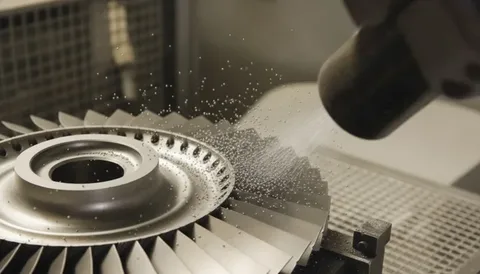
Understanding Surface Compression Mechanisms in Precision Shot Peening

Introduction
Imagine taking a tiny hammer and gently tapping a sheet of metal thousands of times a minute. Every single tap pushes the metal surface inward slightly, creating tiny dimples. While it might look like you are just dimpling the outside, something remarkable is happening right beneath that surface layer. This process, widely known across modern manufacturing, is what we call Shot Peening. It acts as a protective shield for structural parts, boosting their lifespan and making sure they do not snap under stress. When mechanical components undergo high stress day in and day out—think aircraft engine components, high-performance racing gear, or industrial turbine blades—they develop invisible stress points. Left untreated, those tiny tension points gradually turn into microscopic cracks that eventually split the metal open. By applying controlled surface compression right from the start, we change how the metal reacts to heavy workloads, turning vulnerable surfaces into hardened outer shells that resist failure and keep critical machinery running smoothly through Shot Peening.
How Precision Shot Peening Works Beneath the Metal Surface
To grasp what happens during this treatment, think of metal as a tightly packed grid of atoms. Under normal conditions, pulling or bending a metal part stretches those atomic bonds, putting them under tensile stress. Tensile stress is the villain of structural mechanical engineering because it pulls atomic structures apart, opening the door for fatigue cracks.
When tiny spherical media strike the target material at calibrated velocities, each sphere acts like a miniature anvil. The impact deforms the immediate outer skin plastically, meaning it stretches permanently. However, the deeper layers of metal underneath remain elastic and try to snap back to their original shape. Because the surface layer was permanently stretched, the inner layers push back against it, creating a deep region of residual compressive stress.
Instead of allowing operational forces to pull the material apart, this internal squeeze presses the metal particles back together. Any external force trying to pull the surface apart must first overcome this built-in compression before it can cause any real structural harm.
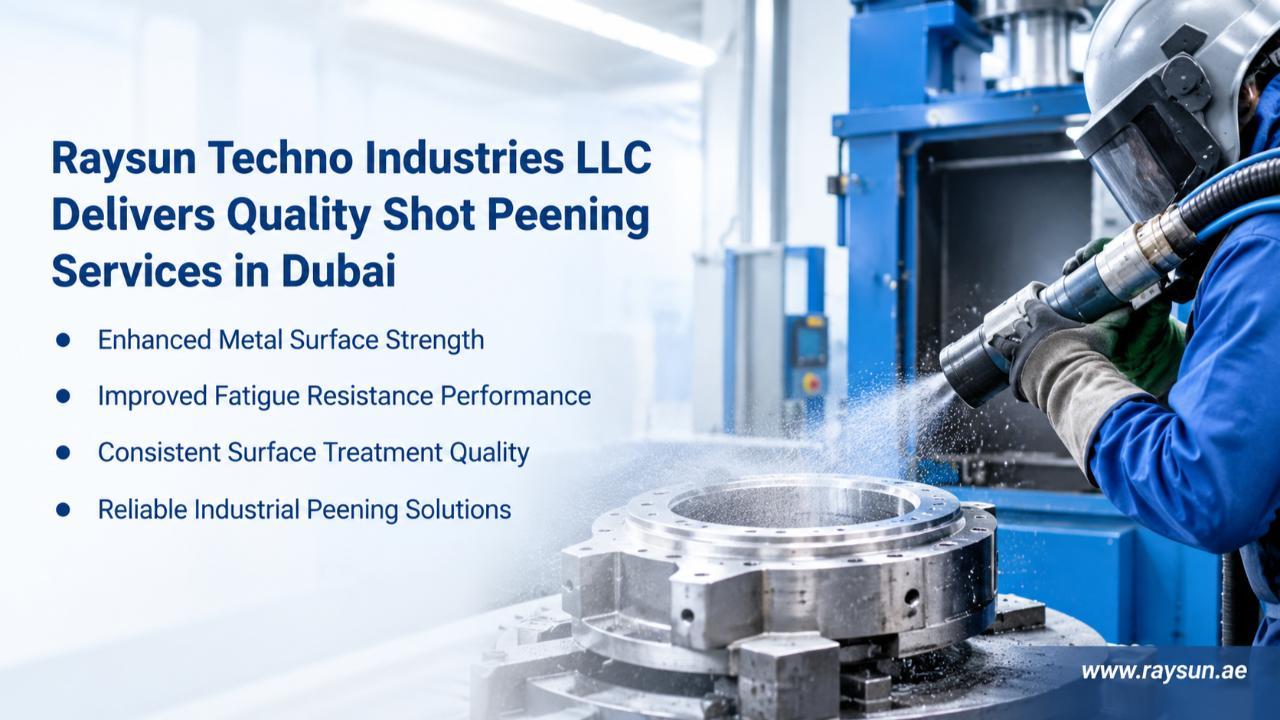
Note: Raysun Techno Industries LLC is a premier provider of Shot Peening in Dubai, helping local manufacturers increase resistance against stress corrosion cracking. We apply rigorous quality controls to ensure uniform surface treatment and consistent hardness. Connect with our engineering specialists today to request a comprehensive service quote for your parts.
Key Features of Surface Compression in Shot Peening
Precision mechanical finishing relies on controlling several distinct variables to make sure the compressive layer forms evenly without damaging the underlying substrate. Controlling these elements ensures the metal gains strength without becoming brittle.
-
Almen Intensity Control: This measures the kinetic energy transferred by the stream of spherical media, ensuring the impact energy penetrates to the exact depth needed.
-
Surface Coverage Rate: Reaching complete visual coverage guarantees that no raw, untreated spots are left behind to become weak links where cracks can start.
-
Media Shape and Hardness: Using perfectly rounded beads made of conditioned cut wire, ceramic, or glass prevents sharp marks that could cause stress concentrations.
-
Compressive Layer Depth: The thickness of the compressed zone is carefully tuned to match the workload of the component, placing maximum protection right where the highest working stresses occur.
Factors That Shape the Compression Profile
-
Impact Velocity: Faster impacts push the compressive zone deeper into the component, though going too fast risks damaging the outer surface texture.
-
Substrate Ductility: Softer alloys absorb the impact energy by stretching more, while harder alloys develop higher levels of localized compression near the surface.
-
Angle of Attack: Hitting the surface at a perpendicular ninety-degree angle delivers maximum energy transfer, whereas angled impacts spread the force out over a wider area.
Why Built-In Compression Prevents Fatigue and Structural Failure
Structural failure rarely happens all at once out of nowhere; it almost always starts at the surface. Tiny surface scratches, microscopic tool marks from machining, or chemical imperfections act as stress concentrators. When a part undergoes repeated flexing or vibration, tension collects at these tiny spots, slowly forcing open tiny micro-cracks.
By introducing a continuous compressive stress zone across the outer surface, precision processing completely alters this failure path. Since cracks require tensile stress to widen and propagate, encountering a compressive zone brings crack growth to a complete halt. The internal squeeze holds the crack faces shut, preventing microscopic flaws from growing into structural failures.
Beyond fatigue resistance, this internal force also guards against stress corrosion cracking. Environmental moisture, salts, and chemicals attack metals much faster when the surface is under tension. Replacing surface tension with uniform compression creates a barrier that resists environmental degradation and mechanical wear at the same time.
Conclusion
Mastering surface compression mechanisms transforms how we engineer durable, reliable metal components for high-stress applications. By converting destructive surface tension into protective compression, this process turns potential points of failure into resilient, long-lasting assets. Precision application ensures that every component withstands rigorous operational demands, extending service lifespan while maintaining structural integrity. At Raysun Techno Industries LLC, delivering advanced manufacturing solutions and superior surface treatment standards remains central to keeping industrial machinery running at peak performance.