
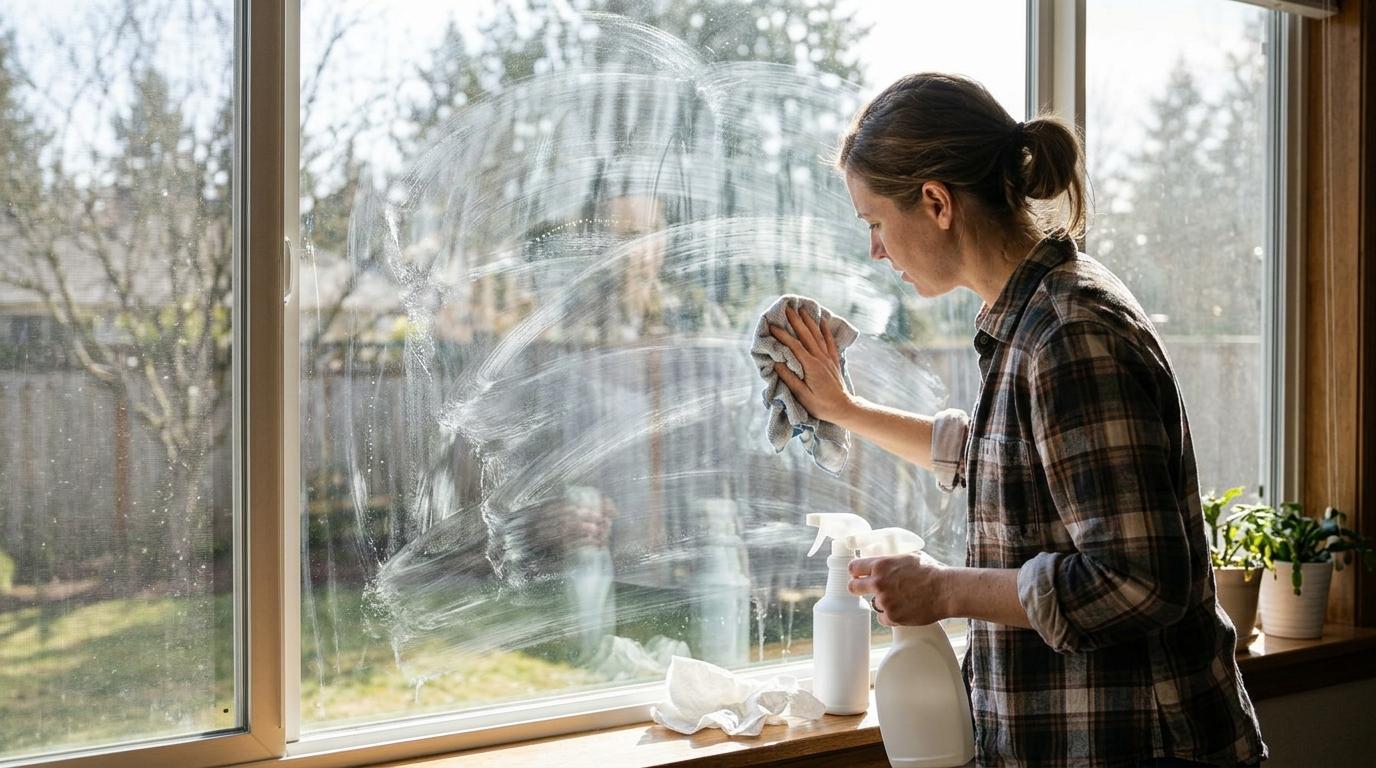

You finish washing the windows, step back to admire the glass, and notice streaks appearing as soon as the sunlight hits. The windows looked clear while they were wet, but now there are cloudy patches, narrow lines, and faint marks running across the surface. This is a familiar problem, and it does not always mean the windows are still dirty.
Streaks often develop because of the cleaning solution, water quality, drying conditions, or the way dirt is removed. Understanding the cause makes it easier to correct the problem without repeatedly washing the same glass or using products that could damage it.
Why Do Streaks Appear on Windows After Cleaning?
Window streaks usually form when something remains on the glass after the water evaporates. It could be leftover detergent, minerals from tap water, loosened dirt, or moisture that was not removed evenly. The residue becomes more noticeable when direct sunlight passes through the window at an angle.
The type of mark can provide a clue about its cause. Thin lines often follow the movement of a squeegee or cloth, while cloudy patches may indicate uneven drying or cleaning product buildup. Small circular spots frequently develop where individual water droplets evaporated. Recognizing these patterns helps identify the correct solution instead of applying more cleaner to an already coated surface.
Hard Water Can Leave Minerals Behind
Tap water contains naturally occurring minerals, including calcium and magnesium. When water droplets dry on glass, these minerals can remain as visible deposits. The problem becomes more noticeable when windows are repeatedly exposed to sprinkler spray or when rinse water is allowed to evaporate without being removed.
Fresh mineral spots may respond to appropriate routine cleaning, but older deposits can become difficult to remove. Some persistent marks involve surface damage rather than material that can simply be washed away. Aggressive scrubbing is not a reliable solution because abrasive products can scratch glass or damage specialized coatings.
For homeowners considering window cleaning services, it is worth identifying whether the problem is ordinary dirt, removable mineral deposits, or existing glass damage. Different conditions require different methods, and not every visible mark can be corrected through standard cleaning.
Too Much Cleaning Solution Can Make Windows Look Worse
Using more detergent does not necessarily produce cleaner glass. Excess solution may leave a thin film after rinsing, particularly when the product is not removed completely. That film can create a cloudy appearance and make subsequent cleaning more frustrating.
The type of product matters as well. Some household cleaners contain ingredients that are unsuitable for particular glass coatings, window films, or surrounding frame materials. Products intended for ordinary glass should not automatically be used on every window without checking the manufacturer's instructions.
A better approach is to use a compatible cleaning product at the recommended concentration. The purpose is to loosen dirt so it can be removed, not to leave a thick layer of cleaner across the surface. Proper rinsing and drying are just as important as the solution itself.
How Weather Conditions Affect the Final Finish
Cleaning windows in direct sunlight can make the job more difficult. Warm glass causes moisture to evaporate quickly, sometimes before the cleaning solution can be removed. This leaves uneven deposits across the surface and can produce streaks even when the cleaner uses appropriate tools.
Wind can create another problem by carrying dust or pollen onto freshly cleaned glass. In Northern Kentucky, seasonal pollen and airborne debris can settle on windows during periods of dry weather. Cleaning during strong winds may therefore produce disappointing results even when the original dirt has been removed.
A mild, overcast day is often a practical choice for exterior window cleaning. The glass usually remains wet long enough to remove the solution evenly, and the person cleaning has more control over the finished surface. Freezing conditions should be avoided because water can create ice hazards and interfere with proper cleaning.
How to Clean Windows Without Leaving Streaks
The most effective approach begins by removing loose dirt before wiping the glass. Dust, grit, and other particles can become trapped beneath cleaning tools, increasing the chance of scratches. Window frames and sills should also be checked because dirty runoff from these areas can leave fresh marks on the glass.
Clean the Surface Before Using a Squeegee
Start by gently removing loose debris and thoroughly wetting the glass with a suitable cleaning solution. A clean, nonabrasive applicator helps loosen dirt without dragging dry particles across the surface. Work across the pane systematically so no section dries before it can be finished.
A quality rubber squeegee can then remove the liquid in overlapping passes. The rubber edge should remain clean and free from damage because small imperfections can leave repeated lines. Wipe the blade when needed and use a clean, lint-free cloth for residual moisture around accessible edges and corners.
Check the Glass From More Than One Angle
A window may appear clear when viewed straight on but show streaks when seen from the side. After cleaning, examine the glass from inside and outside where accessible. Changing the viewing angle helps reveal remaining residue that may otherwise be missed.
If only one small area needs correction, avoid washing the entire pane again unnecessarily. Clean the affected section using the appropriate method, then remove the moisture completely. Repeatedly applying product over the whole window may leave additional residue rather than improve the finish.
When Ordinary Cleaning Cannot Remove the Marks
Some window marks are not caused by dirt. Scratches, damaged coatings, seal failures, and etched glass can produce cloudy or distorted areas that remain after cleaning. These conditions require a different response because additional detergent will not correct the underlying problem.
For example, persistent fogging between panes of an insulated window may indicate that the sealed unit has failed. Since the moisture is trapped between glass surfaces, ordinary cleaning from either side will not remove it.
Hard mineral deposits can also require specialized assessment. Improper scraping or abrasive treatment may permanently damage the glass, especially when surface coatings are present. Before attempting aggressive removal, determine whether the mark is actually sitting on the surface or has become part of the damaged glass.
How Often Should Residential Windows Be Cleaned?
There is no single cleaning schedule that suits every property. Windows near busy roads, construction activity, trees, or regularly operating sprinklers may collect deposits more quickly than windows in sheltered locations. Seasonal pollen can also make exterior glass appear dirty within a relatively short period.
Instead of relying only on a fixed calendar, inspect the windows for visible buildup, reduced clarity, and recurring water spots. Some homeowners prefer cleaning during seasonal maintenance, while others need more frequent attention because of their surroundings.
Interior and exterior surfaces may also require different schedules. Outdoor glass is exposed to weather, insects, and airborne debris, while indoor glass is more likely to collect fingerprints, cooking residue, and household dust.
Mistakes That Can Damage Window Glass
One of the most common mistakes is trying to remove stubborn marks with sharp blades or abrasive pads. These methods can scratch glass, damage coatings, or create permanent visible marks. Even materials that seem soft may become abrasive when they trap grit.
Other mistakes worth avoiding include:
-
Cleaning hot glass with a solution that dries too quickly.
-
Reusing dirty cloths that spread residue across the pane.
-
Applying unsuitable chemicals to coated or treated glass.
-
Allowing dirty water from frames to run over finished sections.
-
Using unsafe ladders to reach upper-story windows.
Difficult-to-reach glass deserves particular caution. Maintaining clear windows should never require leaning from an upper-story opening or attempting to work from an unstable ladder.
Final Thoughts
Streak-free windows require more than applying cleaner and wiping the surface. Water quality, cleaning products, environmental conditions, and drying technique all influence the finished appearance. Identifying the source of recurring marks can prevent unnecessary scrubbing and help protect the glass.
One useful concept is surface tension, which influences how water spreads and forms droplets on a surface. Understanding how water behaves during cleaning helps explain why controlled washing and complete moisture removal produce more consistent results. When marks remain despite correct cleaning, assessing the condition of the glass is often more useful than repeating the same process.