
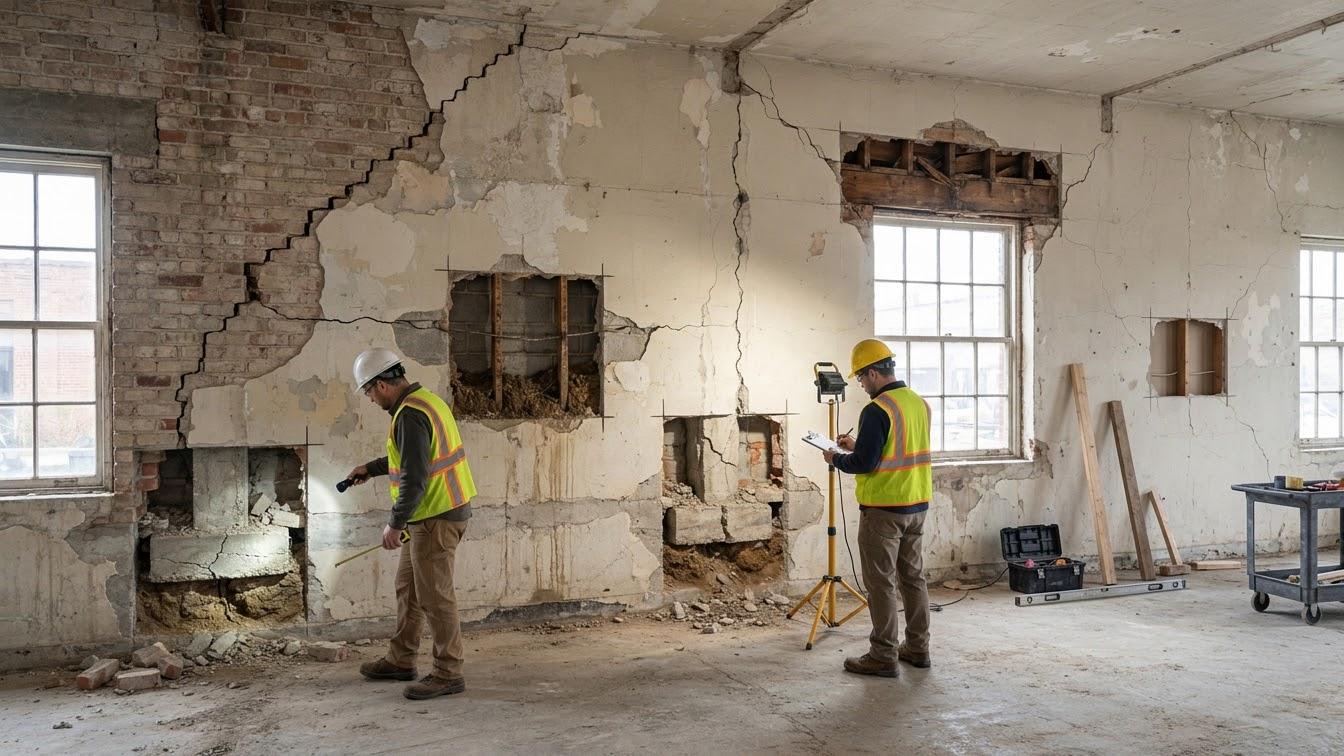

A thin crack above a doorway might seem harmless until it returns a few weeks after being filled. Another crack may run across the ceiling, while a wider opening near a window continues growing over time. Although these problems look similar from a distance, they do not necessarily have the same cause. Some develop because of ordinary movement in building materials, while others indicate moisture damage, poor previous repairs, or changes in the surrounding structure.
The difficult part is understanding what the visible damage actually means. Filling a crack without identifying why it formed can lead to repeated repairs and unnecessary expenses. Homeowners who recognize the difference between cosmetic damage and potentially serious conditions can make better decisions about what should be repaired, what needs monitoring, and when a specialist should investigate further.
Why Cracks Develop in Finished Interior Walls
Drywall consists of a gypsum core covered with facing material. Individual panels are attached to framing, and their joints are concealed using tape and joint compound. Once the wall is painted, the surface appears continuous, even though separate panels remain underneath. Movement at these connections can sometimes create visible cracks, particularly where building materials experience different amounts of expansion or contraction.
Changes in temperature and humidity can contribute to movement in framing and finishing materials. A minor crack near a ceiling joint may develop as the building responds to these conditions. However, recurring or widening cracks can also result from structural movement, improper fastening, or an unsuitable finishing method. Their appearance alone does not establish the cause.
One important distinction is whether the crack remains stable. A narrow line that does not change for years may need a different response from a crack that continues opening, shifts alignment, or appears alongside sticking doors and uneven floors. Tracking these conditions helps determine whether ordinary surface repair is appropriate.
What Different Crack Patterns May Indicate
The position, direction, and behavior of a crack can provide useful clues. However, no single pattern reliably identifies a structural problem without considering the building and its history. The purpose of examining the crack is to decide what additional information is needed before covering the damage.
Straight Cracks Along Panel Joints
A straight crack following a drywall seam may indicate movement between adjacent panels or a problem with the original joint treatment. If tape was not properly embedded, the compound was unsuitable, or the panels were not adequately supported, the finished joint may eventually separate.
A repair that simply fills the visible line may fail because it does not reinforce the joint. When the underlying panels remain sound and stable, the damaged finishing material may need to be removed and the seam retaped using compatible materials. The repair should extend far enough beyond the joint to create a gradual transition into the existing surface.
Diagonal Cracks Near Doors and Windows
Diagonal cracks sometimes appear around openings because these locations experience changes in load distribution and movement in surrounding framing. The crack may involve the drywall finish, but it can also be associated with a wider building movement issue.
A homeowner should pay particular attention when diagonal cracks grow, reappear after repair, or occur alongside doors that suddenly become difficult to close. These symptoms do not automatically prove foundation failure, but they justify further evaluation. Repairing the surface before understanding the movement may conceal a problem temporarily without correcting it.
Ceiling Cracks and Separating Corners
Cracks where walls meet ceilings can develop when connected framing members move differently. Some ceiling-to-wall cracks are associated with seasonal framing movement, while others can involve inadequate joint treatment, physical damage, or moisture exposure.
The surrounding conditions matter. A narrow recurring line with no other damage may require a different repair from a ceiling showing sagging, staining, or loose material. If the ceiling appears unstable, keep people away from the affected space and arrange professional evaluation rather than attempting a cosmetic patch.
Why Some Cracks Return After Being Repaired
A repaired wall may look smooth immediately after painting, but the same line can reappear when the original cause remains active. One common problem is applying joint compound directly over a moving crack without properly reinforcing the joint. The new material may conceal the opening temporarily, but movement can separate it again.
Another cause is poor surface preparation. Dust, loose compound, damaged tape, or unstable existing material can interfere with adhesion. Applying thick layers of compound also creates unnecessary shrinkage and may leave a raised repair that becomes visible after painting. Proper preparation and a suitable finishing method are more important than simply adding more material.
For homeowners arranging sheetrock repair dallas, explaining whether a crack has returned after previous work is valuable information. A contractor should examine the existing finish, determine whether the underlying panel is secure, and consider whether movement or moisture is contributing to the failure.
The best repair method depends on what caused the crack. Repeatedly applying filler without investigating the surrounding conditions can waste time and make later repairs more difficult.
How Moisture Changes the Repair Decision
A crack accompanied by discoloration, bubbling paint, softness, or a musty smell deserves more attention than an isolated cosmetic line. Moisture may enter through plumbing leaks, roofing defects, condensation, or water exposure from another part of the building. Gypsum board can lose integrity when sufficiently damaged by water, and wet facing materials can support mold growth under suitable conditions.
The first priority is identifying and stopping the moisture source. Covering a stain with paint or applying joint compound to damp material does not establish that the underlying problem has been corrected. Moisture can remain behind the surface, particularly when insulation or framing has also become wet.
The Environmental Protection Agency recommends drying wet materials promptly, generally within 24 to 48 hours where possible, to reduce the risk of mold growth. The appropriate response depends on the amount and type of water exposure, the condition of the affected material, and whether contamination is present.
Drywall that remains firm, intact, and properly dried after limited clean-water exposure may sometimes be retained. Severely softened, swollen, contaminated, or mold-damaged material may require removal and replacement. Sewage exposure or substantial mold growth calls for appropriate professional remediation rather than ordinary cosmetic patching.
When Is a Surface Repair Enough?
A localized repair may be appropriate when the drywall is sound, the damaged section is limited, and the cause has been addressed. Small dents, isolated fastener marks, and stable cracks can often be corrected without replacing large sections of wallboard.
However, the repair should match the nature of the defect. A shallow indentation may need only suitable filling and finishing, while a cracked panel joint may require tape and additional compound. A larger opening may need backing or attachment to framing before replacement board is installed.
The important distinction is whether the surrounding drywall can support the repair. Compound cannot replace the strength of missing backing, and surface tape cannot make severely damaged board structurally sound.
A practical initial assessment should consider:
-
Damage pattern: Is the crack isolated, recurring, or spreading?
-
Surface condition: Is the board firm, dry, and securely attached?
-
Nearby symptoms: Are doors sticking, finishes separating, or stains developing?
-
Repair history: Has the same section been repaired before?
-
Location: Does the damage occur near an opening, ceiling joint, or known moisture source?
These observations help homeowners describe the problem accurately. They are not a substitute for a structural assessment when building movement is suspected.
Why Damage Size Does Not Tell the Whole Story
A small crack can sometimes require more investigation than a large accidental hole. For example, a hole caused by moving furniture may have a clear cause and a straightforward repair method. A thin crack that continues widening near a doorway may involve movement that should be evaluated before refinishing.
This is especially important when comparing repairs between properties of different ages and construction histories. Someone researching drywall repair mckinney tx may be dealing with a recently renovated house, an older property, or damage following foundation-related work. The same visible crack can require different attention depending on the circumstances.
The objective should be identifying the reason for the damage before deciding how much material to replace. A wider repair is not automatically better, and a smaller repair is not always sufficient.
How to Prepare the Damaged Surface for a Lasting Repair
Once the underlying cause has been addressed and the repair method established, surface preparation becomes important. Loose compound, failing tape, and damaged material must be handled appropriately so the new finish bonds to a stable base. Applying fresh compound directly over loose paint or crumbling material can produce another weak layer.
The required preparation varies according to the repair. A shallow cosmetic defect may need cleaning and suitable filling, while a separated joint may require removing failed tape and rebuilding the joint treatment. If wallboard has been cut out, the replacement must be adequately supported and secured before finishing.
Joint compound should be applied in suitable layers according to the product instructions. Drying or setting time depends on the compound type, application thickness, temperature, and humidity. Rushing subsequent coats can trap moisture, increase shrinkage problems, or create sanding difficulties.
A repair should also account for the surrounding finish. On a textured wall, the replacement section may need a matching pattern. On a smooth wall, the compound must be feathered gradually beyond the damaged section to avoid creating a visible ridge.
Why Paint Can Make a Repaired Crack More Noticeable
A repaired crack can disappear before painting and become obvious again once the wall receives its final coat. This often happens because the repaired material and surrounding painted surface absorb paint differently. The difference may create a visible patch even when the joint itself is smooth.
Lighting can make the problem more noticeable. Sunlight entering from a nearby window may reveal ridges or changes in surface texture that are difficult to see under ordinary room lighting. Glossy or darker paint finishes can also emphasize imperfections when the surface preparation is insufficient.
A suitable primer helps reduce differences in absorption between the repaired area and the existing wall. The finishing process should also match the surrounding texture and paint appearance. In some cases, repainting a broader wall section produces a more uniform result than applying paint only over the repaired crack.
The quality of the finished surface depends on preparation, lighting, texture, and paint, not simply on whether the crack has been filled.
When Should a Structural Professional Be Consulted?
Drywall contractors can assess and repair damaged wallboard, but they are not necessarily the appropriate professionals to diagnose structural movement. When cracks appear alongside significant building changes, the underlying condition may require evaluation by a qualified structural engineer or another suitably qualified specialist.
Warning signs include cracks that continue widening, noticeable displacement between wall surfaces, significant new floor movement, and doors or windows that suddenly become difficult to operate. These observations do not confirm a particular foundation or framing defect, but they should not be hidden beneath a cosmetic repair without investigation.
A structural assessment can help determine whether movement is ongoing and whether corrective work is required. Drywall repairs should generally follow necessary structural corrections so that new finishes are not damaged by unresolved movement.
How to Compare Repair Estimates Properly
A useful drywall estimate should explain the proposed repair rather than identify only the square footage of damaged material. Two cracks of similar length may require different work because one is a stable surface defect and the other involves failed joint tape or damaged board.
Ask whether the proposed work includes removing loose material, replacing damaged sections where necessary, joint reinforcement, finishing, texture matching, priming, and painting. The estimate should also identify whether moisture or structural problems must be handled separately.
Homeowners should be cautious about promises of completely invisible repairs without examining the existing wall finish. Texture age, paint color, lighting, and previous repairs can affect the final appearance. A realistic explanation of these limitations is more useful than an unsupported guarantee.
The goal is to choose a repair method that addresses the actual condition and produces an appropriate finish, rather than paying for repeated cosmetic corrections.
Conclusion
Not every wall crack indicates serious building damage, but recurring, widening, or moisture-related cracks deserve investigation before they are covered. Understanding the crack's location, repair history, and surrounding conditions helps determine whether a localized repair is sufficient or further evaluation is necessary. One useful technical concept is differential settlement, where different parts of a structure move by unequal amounts and may affect finishes above them. A lasting repair begins with identifying the cause, correcting any underlying problem, and then restoring the wall using materials and finishing methods suited to the damage.