

Beyond Problem Solving: Building Proactive Customer Support with Salesforce Service Cloud
 Introduction: A Better Approach to Customer Service
Customer service is often measured by how quickly a team responds to complaints. However, businesses can also improve the experience by making useful information easier to find, recognizing recurring problems, and establishing processes that help prevent avoidable delays.
A proactive approach requires visibility into customer interactions and a reliable way to turn service information into practical improvements.
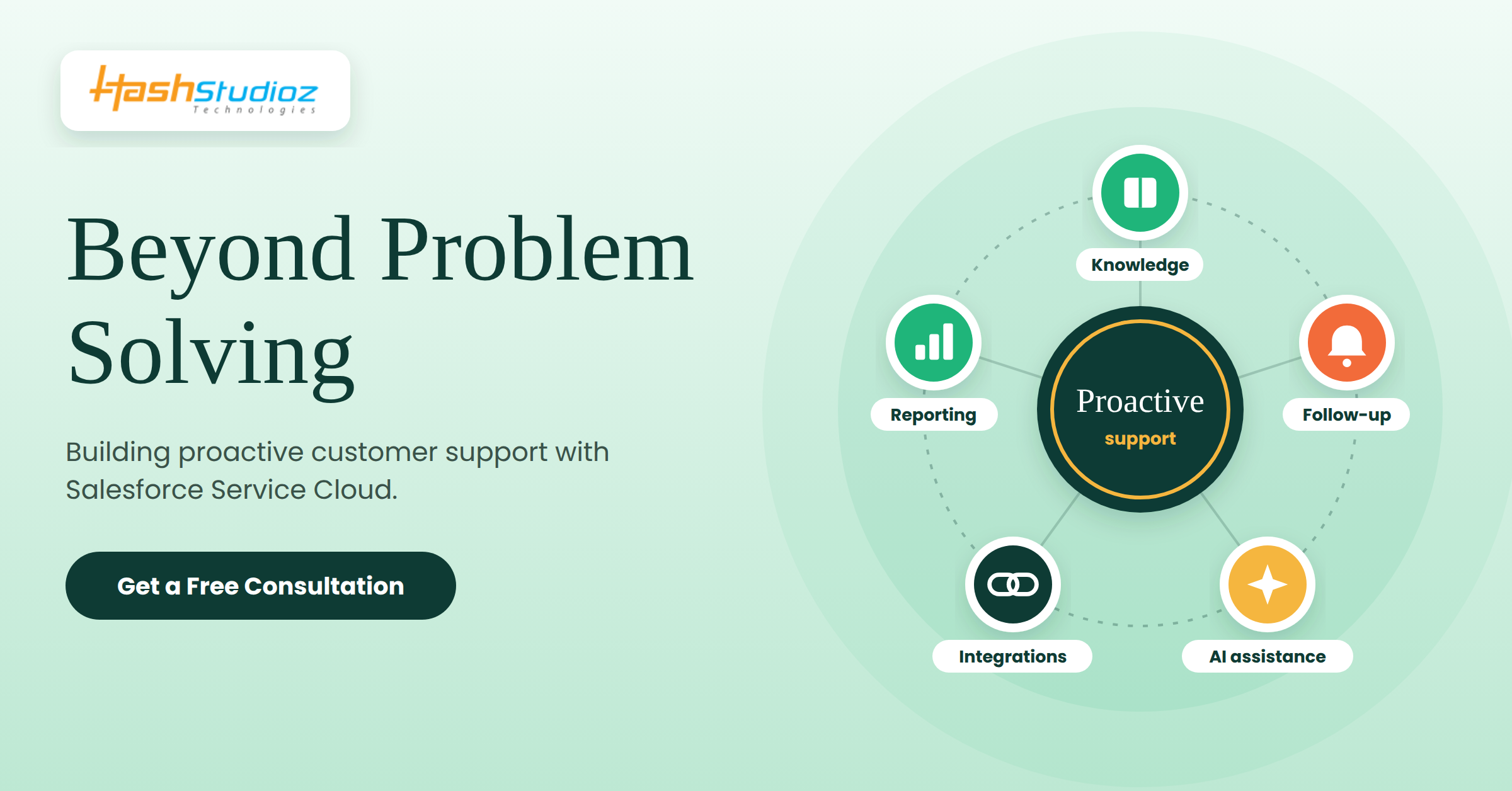
Salesforce Service Cloud provides capabilities for case management, knowledge management, automation, AI-assisted recommendations, and reporting. When these capabilities are aligned with business processes, they can help organizations move from handling individual requests toward improving the overall service experience.
Learn from the Questions Customers Ask
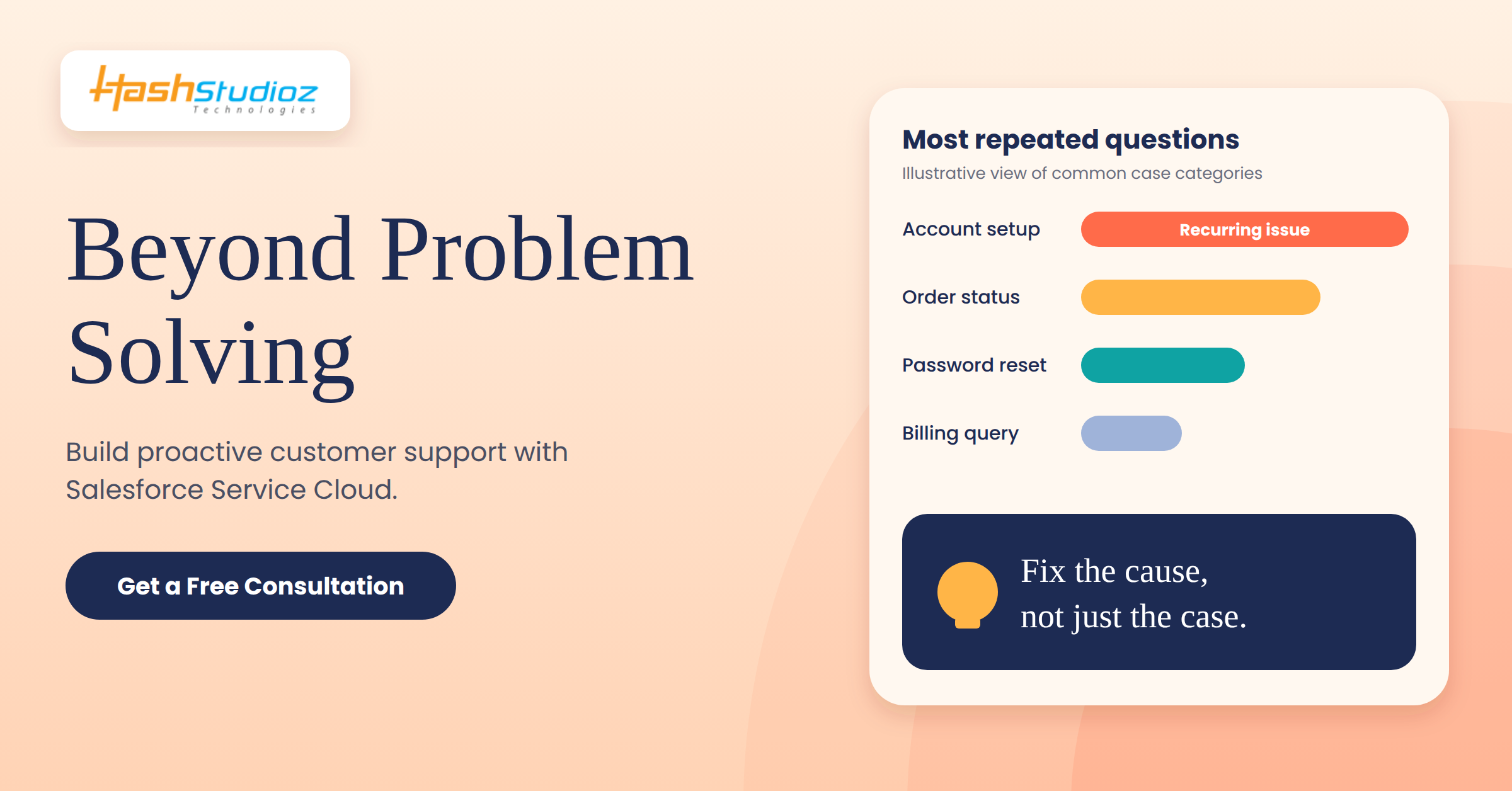
Repeated customer questions can reveal weaknesses in products, communication, or service processes. If many customers contact a company about the same issue, the cause may be more significant than a single unresolved case.
Salesforce Service Cloud helps centralize service cases and customer interactions, making it easier for teams to review common request categories and identify patterns.
For example, a company might receive frequent questions about setting up a new account. The support team could investigate whether the onboarding instructions are unclear or whether customers need additional guidance.
By addressing the underlying cause, the organization may reduce avoidable requests and make the customer journey easier to navigate.
1. Build a Useful and Reliable Knowledge Base
A knowledge base allows businesses to provide customers and service representatives with consistent information. It may contain frequently asked questions, product instructions, troubleshooting guides, and explanations of common service procedures.
Salesforce Service Cloud supports knowledge management that organizations can configure around their service requirements.
The quality of the content matters as much as its availability. Articles should use straightforward language, provide clear steps, and explain what customers should do when a solution does not work.
Businesses should also establish ownership for reviewing and updating knowledge resources. Product changes, revised procedures, and recurring customer questions can all create reasons to update existing content.
When reliable information is easy to access, customers can resolve suitable questions independently, while agents can concentrate on cases that need individual attention.
2. Create Consistent Follow-Up Processes
Customers may become frustrated when they have to ask for updates or contact multiple representatives about an unresolved issue.
Salesforce Service Cloud supports case tracking, assignment, and configured escalation workflows. These capabilities can help teams maintain visibility into open requests and establish clearer procedures for follow-up.
For instance, a business may configure notifications when a case reaches a particular stage or escalation rules for requests requiring additional attention.
The appropriate process depends on the organization's service commitments. Teams should define ownership, expected actions, and exception handling before introducing automation.
Consistent follow-up helps representatives manage expectations and reduces the likelihood that important requests will be overlooked.
3. Use AI as an Additional Source of Assistance
AI-powered capabilities can support service representatives by providing recommendations or helping them identify relevant information. Salesforce Einstein features, where available and appropriately configured, may assist with next-best-action guidance and other service activities.
These capabilities should be introduced with a clear understanding of the problem they are intended to address.
For example, an AI-assisted recommendation may help an agent identify a relevant knowledge resource. The representative should still verify that the information applies to the customer's situation before providing guidance.
Organizations should consider data quality, access permissions, appropriate human oversight, and the suitability of each use case. AI can support service delivery, but it should not remove accountability from the people responsible for customer outcomes.
4. Connect Customer Support with Other Departments
Some customer issues originate outside the service department. A delivery complaint may involve logistics, a billing question may require finance information, and a technical problem may need product-team involvement.
Connected workflows and appropriate integrations can help authorized teams access relevant information and coordinate their actions.
HashStudioz Technologies provides Salesforce Service Cloud integration services that can help businesses connect relevant applications according to their operational needs.
Clear data ownership and communication procedures remain important. Integrations should support a defined process rather than simply exchange information without a clear purpose.
5. Measure Whether Proactive Changes Work
Reports and dashboards can help businesses monitor case volumes, resolution times, agent productivity, and customer satisfaction indicators.
These measures can be reviewed before and after process changes to understand whether an improvement is producing the intended effect.
For example, if a company updates its account setup guide, the service team can examine whether related questions become less frequent. Such comparisons should account for changes in customer volume and other factors that may influence results.
Regular reviews help businesses refine their processes and identify new improvement opportunities.
How HashStudioz Technologies Can Help
HashStudioz Technologies supports Service Cloud consulting, implementation, customization, migration, integration, and ongoing optimization. Its process includes discovery, solution design, configuration, testing, deployment, and support.
This approach helps organizations identify suitable improvements and align platform capabilities with their customer service objectives.
Conclusion
Proactive customer support involves understanding recurring needs, providing reliable information, maintaining consistent follow-up, and learning from service data. Salesforce Service Cloud offers capabilities that can support each of these activities.
Ready to improve your service strategy? Contact HashStudioz Technologies to explore Salesforce Service Cloud solutions that fit your business requirements.